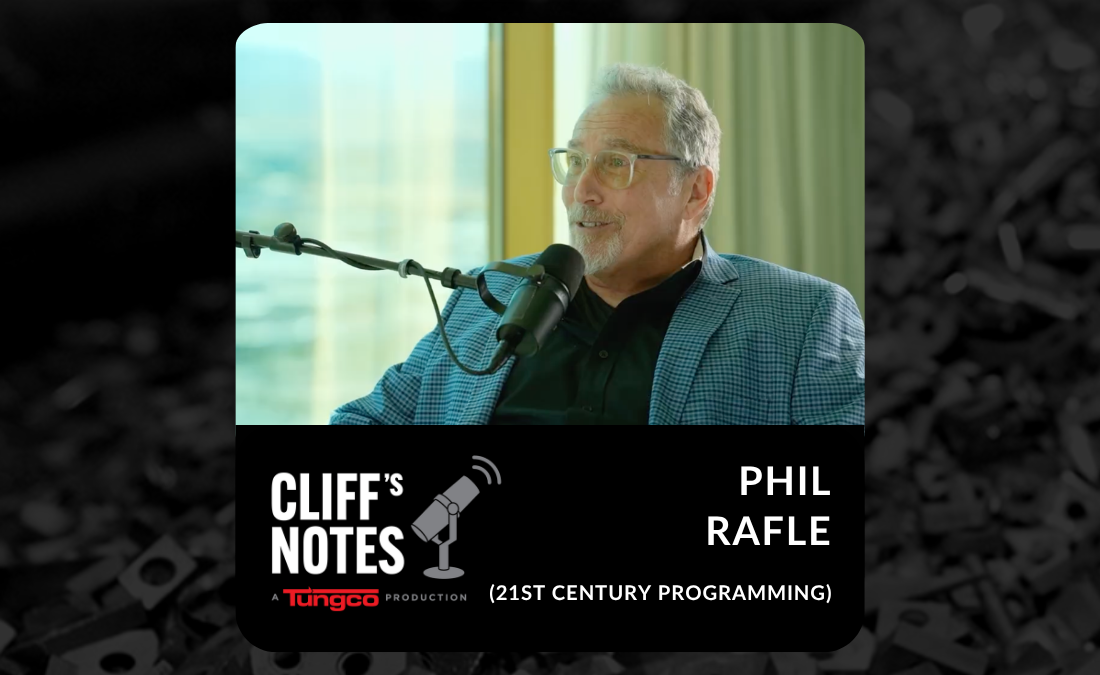
Every tick of the scale, every supplier payment, every load moving in and out of a Tungco facility runs through software. In Episode 305 of Cliff’s Notes, Cliff sits down with Phil Rafle of 21st Century Programming — makers of ROM, the Recycling Operations Manager platform Tungco has used for over 20 years — for a candid look at what operational technology in the scrap industry actually looks like, and where AI fits into that picture right now.
From Excel Sheets to ROM: A 20-Year Partnership
The Tungco and 21st Century relationship dates back to around 2008-2010, when Tungco’s bank told them that running on Excel wasn’t going to cut it anymore. Cliff went looking for inventory software, landed on ROM, and signed the contract at an ISRI convention — nervous enough that he still remembers flying out to tour 21st Century’s offices alone, young and green, telling himself not to blow it.
Phil has been with 21st Century for 22 of the company’s 26 years. In that time he’s watched Tungco grow from a single location in Long Beach to multiple sites — and ROM has grown with them. The new generation is ROM Infinite: a rebuilt front end using modern React architecture on the same proven database, adding cloud flexibility, GPS integration, Microsoft Business Intelligence connectivity, and AI-enabled features that are starting to reshape how scrap yards operate.
What AI Can and Can’t Do in a Scrap Yard Right Now
The most useful part of Episode 305 for anyone running a recycling operation is Phil’s honest assessment of AI’s current role — and its limits. ROM already uses AI for facial recognition (pricing overrides, boarding tickets), automated GPS alerts, and data reporting. Tungco has gone a step further, investing in an AI-powered optical sorter with deep learning capability — not limited to a handful of shapes like older systems, but able to learn thousands of shapes and build supplier-specific recognition programs.
Where both Cliff and Phil pump the brakes: AI grading of incoming material. The problem is visibility. AI can only grade what it can see — and in this industry, it’s the bottom of the box that counts. A misgrade in tungsten or other high-value scrap categories isn’t a small rounding error; it’s a significant dollar consequence. Human verification stays essential. The technology is growing fast, but it’s not there yet — and Phil says so directly.
Infrastructure, Training, and Why Software Fails
Phil’s framework for successful software adoption is simple and practical: infrastructure first, training second, software third. A 2008-era server can still run ROM — Phil’s seen it — but it’s a vulnerability. And the bigger risk is training: in high-turnover environments, knowledge degrades every time someone leaves and trains the next person imperfectly. Investing in professional refresher training from 21st Century pays compounding dividends over time. The software is only as good as the people and systems supporting it.