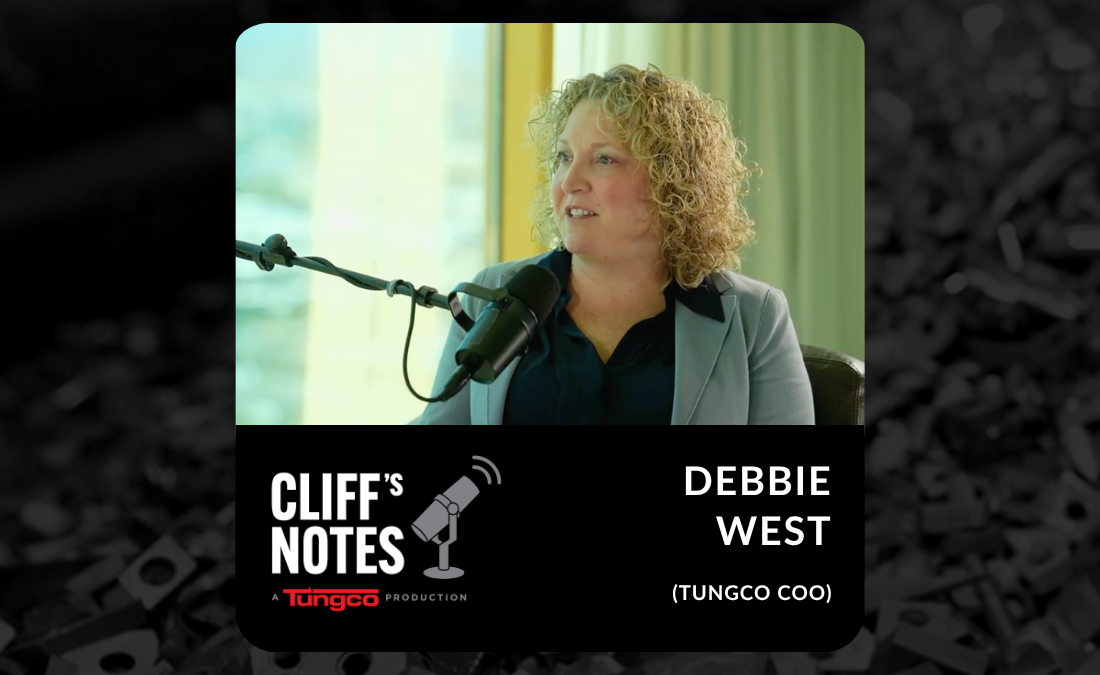
In Episode 303, Cliff sits down with Debbie West for a wide-ranging update on what’s happening inside Tungco, how Project 74 is progressing, and why building domestic tungsten processing capacity is a lot harder than most people writing about it seem to understand.
■ Watch Episode 303 on YouTube.
The COO Role — and What the Leap of Faith Actually Looked Like
Debbie came into Tungco originally focused on finished products as president of Lineage — a role based out of Houston, with a plan to travel rather than relocate. Plans changed, and she made the move to Madisonville. Now, over a year into the COO role, she describes the job as part strategic orchestration and part making sure a high-powered, highly motivated team doesn’t get stuck in deliberation when a decision has already been made. Her personal working style: decide and move.
Project 74: From Concept to Reality
Project 74 is moving from plan to reality — and Debbie is direct about what makes it significant. The Western world talks a lot about recycling and reshoring critical materials, but the capacity to actually process those materials domestically hasn’t kept pace with the conversation. Project 74 is opening a new avenue in the tungsten supply chain, specifically focused on building the processing capacity to keep more material on this side of the supply chain rather than letting grades leave the country because they’re harder to process.
Alongside Project 74, Tungco has also brought a zinc reclaim process online — something that wasn’t even on the radar when Debbie joined, but has since moved from concept to an operational process producing reclaimed zinc powder currently in qualification.
APT Is Not a Commodity: The Chemistry Nobody Is Getting Right Online
One of the sharpest moments in Episode 303 is Debbie’s response to the wave of LinkedIn posts and articles confidently explaining how the West can just stand up APT plants and cut China out. Her take: it’s not that simple — and if it were, we would never have become so reliant on Chinese APT in the first place.
Debbie walks through the actual chemistry: tungsten scrap reacts with chemicals to form sodium tungstate (roughly 65-70% tungsten content), which is then processed to extract the tungsten from the sodium, stripped with ammonia to form ammonium tungstate solution, crystallized, dried, and blended to produce APT — the white powder that is the critical intermediate step before pure tungsten metal powder or tungsten carbide. Every step requires specific chemistries, pH management, gravity control, and waste stream handling. The companies that do it well have been at it for decades and still face daily challenges.
If you missed it, this is where it all started — watch the launch of Project 74 here: https://www.youtube.com/watch?v=RpytM1EbKLo